Avoir la peau sensible ne signifie pas que vous ne pouvez pas porter de bijoux tous les jours. Cela signifie que vous devez être plus attentif à ce que vous portez et à la manière dont vous le portez. Les personnes qui renoncent aux bijoux le font généralement après une mauvaise expérience avec les mauvais matériaux, et non parce que leur peau est incompatible avec les bijoux en général.
Voici un guide pratique pour constituer une garde-robe de bijoux qui fonctionne réellement avec votre peau.

Commencez avec un seul matériau, pas une collection entière
L'erreur la plus courante est d'acheter plusieurs pièces à la fois, de les porter toutes, d'avoir une réaction, puis de ne pas savoir quelle pièce en est la cause. Commencez par une pièce dans un matériau reconnu sûr — l'argent sterling 925 certifié ou le vermeil d'or 18 carats sont les meilleurs points de départ — et portez uniquement cette pièce pendant une semaine avant d'ajouter quoi que ce soit d'autre.
Une fois que vous savez que votre peau est satisfaite de ce matériau, vous pouvez ajouter d'autres pièces en toute confiance. Si vous avez une réaction, vous savez exactement quelle nouvelle addition l'a provoquée.
La routine quotidienne qui aide réellement
Mettre des bijoux
Mettez toujours vos bijoux après votre routine complète — une fois que la crème hydratante, le parfum et la crème solaire ont séché. Les parfums et les composés chimiques contenus dans les produits de soin de la peau sont piégés entre votre peau et les bijoux et provoquent une irritation qui n'a rien à voir avec le métal lui-même. Cette habitude élimine une part significative des situations où l'on se demande « pourquoi ma peau réagit-elle ».
Pendant la journée
Enlevez les bagues et les bracelets avant de vous laver les mains, de faire la vaisselle ou de cuisiner. L'humidité piégée sous les bijoux — surtout par temps chaud ou pendant l'exercice — crée des conditions idéales pour l'irritation. Il ne s'agit pas d'un métal réactif, c'est juste de la physique.
Si vous faites de l'exercice avec des boucles d'oreilles, nettoyez les tiges et les fermoirs avec un chiffon doux après. La sueur qui sèche sur le métal et reste ensuite en contact avec votre peau est plus problématique que la sueur qui est essuyée.
Enlever les bijoux
Essuyez chaque pièce avec un chiffon doux et sec avant de la ranger. Cela élimine les huiles cutanées, la sueur et les résidus de produits. Le nettoyage des bijoux en contact avec votre peau la prochaine fois signifie moins d'irritation cumulative au fil du temps.
Rangez les pièces dans des pochettes douces séparées afin qu'elles ne se rayent pas les unes les autres. Les surfaces métalliques rayées ont plus de surface en contact avec la peau, ce qui augmente à la fois l'irritation et le taux d'altération du métal.
Pendant la nuit
Donnez à vos lobes d'oreille une pause la nuit si vous le pouvez. Dormir avec des boucles d'oreilles crée des heures de contact ininterrompu avec le tissu de la taie d'oreiller, et si vous bougez pendant votre sommeil, la friction s'y ajoute. Les perles en particulier bénéficient d'un retrait nocturne — laisser la nacre respirer empêche l'humidité de se piéger dans le trou de forage.
Constituer votre garde-robe de bijoux pour peaux sensibles
Vous n'avez pas besoin de posséder beaucoup de choses. Vous avez besoin de posséder les bonnes choses.
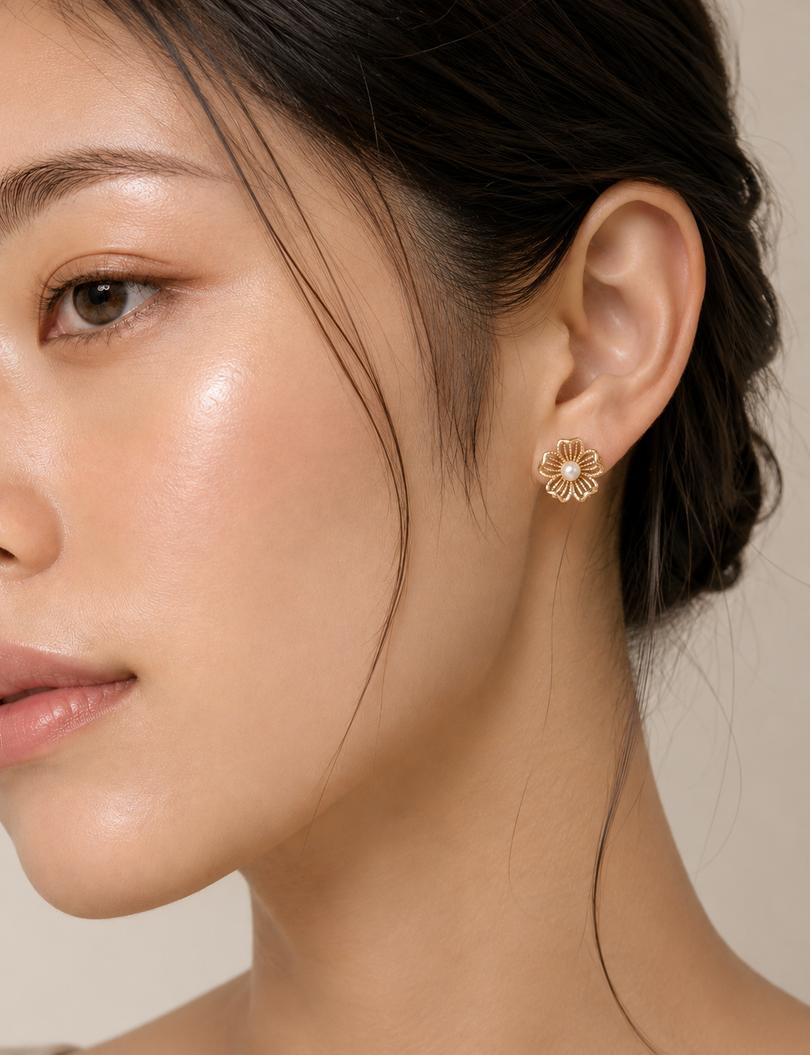
Les pièces fondamentales : Une paire de boucles d'oreilles de tous les jours en argent sterling 925 certifié ou en vermeil d'or 18 carats. Celles-ci doivent être légères, sécurisées et suffisamment simples pour être portées avec n'importe quoi. Les clous d'oreille en perles ou les petites créoles en vermeil d'or sont le choix pratique ici — ils sont appropriés dans presque tous les contextes et ne nécessitent aucune réflexion.
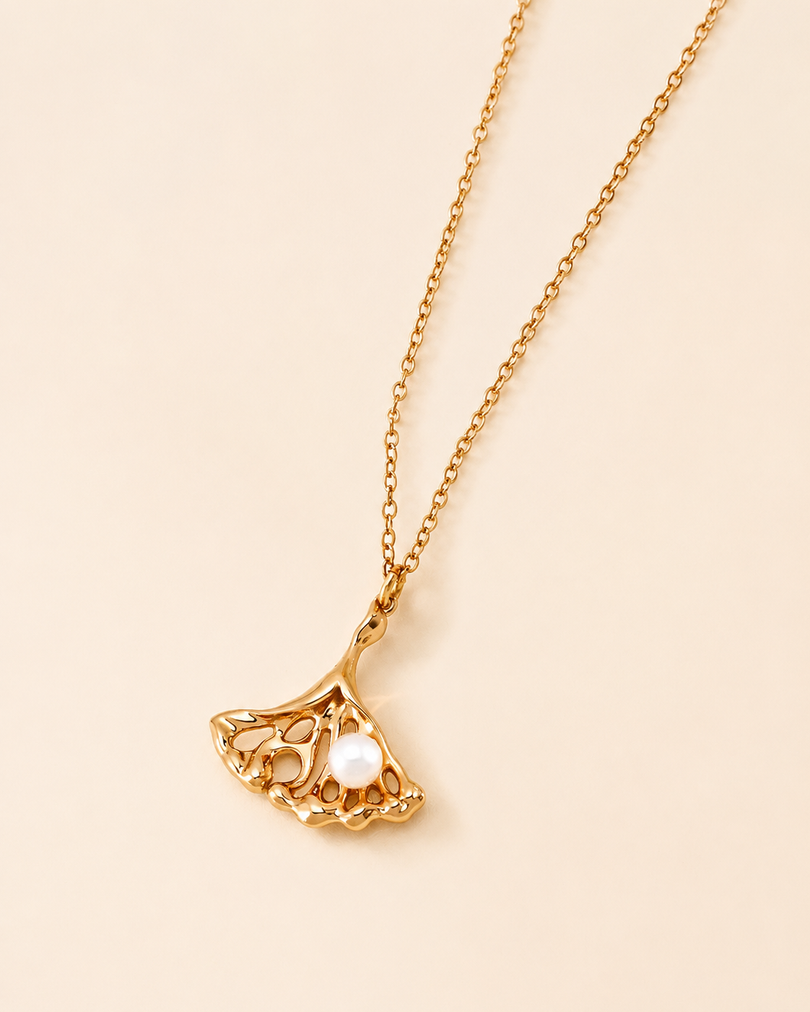
Le collier de superposition : Une chaîne ou un pendentif de la même famille de matériaux que vos boucles d'oreilles. Cela devient le collier quotidien auquel vous n'avez pas à penser. L'objectif est une pièce qui se fond dans votre tenue car votre peau ne vous rappelle jamais qu'elle est là.
Ajouts facultatifs : Un bracelet si vous les aimez — mais soyez honnête quant à savoir si les bracelets conviennent à votre peau. Les bracelets ont plus de contact avec le poignet, bougent davantage et piègent plus d'humidité que les boucles d'oreilles ou les colliers. Certaines personnes ayant la peau sensible s'en sortent mieux avec les boucles d'oreilles et les colliers, mais pas avec les bracelets.
Quand les réactions persistent
Même avec les bons matériaux et les bonnes habitudes, des réactions se produisent parfois. Quelques scénarios à connaître :
Cicatrisation d'un nouveau piercing : Tout piercing sera réactif pendant des semaines ou des mois pendant la cicatrisation. Ce n'est pas une allergie — c'est une réparation tissulaire. Utilisez du titane de qualité implantaire ou de l'or massif pour les nouveaux piercings jusqu'à ce qu'ils soient complètement cicatrisés, puis passez à vos matériaux quotidiens préférés.
Changements cutanés : Les changements hormonaux, le stress et la maladie peuvent tous modifier la réactivité de votre peau. Vous pourriez tolérer une pièce pendant des années, puis y réagir pendant une période de stress ou un événement de santé. Cela ne signifie pas que la pièce est soudainement devenue réactive — cela signifie que votre seuil a temporairement changé.
Métaux des fermoirs et des apprêts : Beaucoup de personnes réagissent aux fermoirs ou aux supports de boucles d'oreilles plutôt qu'à la pièce principale. Le fermoir d'un collier ou le papillon d'une boucle d'oreille est souvent un métal différent (et moins cher) que la pièce elle-même. Si vous réagissez à un collier, vérifiez spécifiquement le matériau du fermoir. Le remplacement d'un fermoir par un en argent sterling résout souvent entièrement le problème.
Comment tester une nouvelle pièce avant de vous engager
Portez la pièce pendant seulement quelques heures le premier jour. Retirez-la et vérifiez votre peau. Si tout va bien, prolongez le temps de port à une journée complète la prochaine fois. La plupart des réactions aux allergies aux métaux apparaissent dans les 12 à 48 heures — donc si votre peau est claire après deux jours complets de port, vous êtes presque certainement en sécurité avec cette pièce.
Pour les boucles d'oreilles spécifiquement : si votre oreille gauche est moins sensible que votre droite, testez la nouvelle paire dans votre oreille gauche en premier. C'est un moyen peu risqué de recueillir des informations réelles avant de vous engager à les porter aux deux oreilles.
Cet article fait partie de notre Guide complet des bijoux pour peaux sensibles.
Foire aux questions
Puis-je porter des bijoux tous les jours si j'ai une allergie au nickel ?
Oui, avec les bons matériaux. L'argent sterling 925 certifié, le vermeil d'or 18 carats, le titane et le platine sont tous appropriés pour un usage quotidien en cas d'allergie au nickel. L'essentiel est de vous assurer de connaître la composition de chaque composant de chaque pièce — pas seulement l'élément principal, mais aussi les fermoirs, les tiges et les apprêts.
Ma peau supporte bien les bijoux en hiver mais réagit en été. Pourquoi ?
La chaleur et la transpiration accélèrent la libération du nickel des surfaces métalliques. La même pièce qui ne cause aucun problème en janvier peut provoquer une réaction en juillet car plus de nickel est libéré dans votre peau par la transpiration. Passez à des styles à contact réduit en été (clous plutôt que créoles, chaînes plus légères), nettoyez les pièces plus fréquemment et retirez-les avant toute activité qui vous fait transpirer.
Est-il sûr de dormir avec des boucles d'oreilles si j'ai les oreilles sensibles ?
Ce n'est pas le matériau qui est le problème — c'est le contact prolongé et la friction. La plupart des personnes ayant la peau sensible s'en sortent mieux en retirant les boucles d'oreilles pendant la nuit, quel que soit le matériau. Si vous avez un piercing cicatrisé qui a tendance à se refermer rapidement, demandez à votre perceur des styles à dos plat qui sont plus confortables pour dormir que les fermoirs papillon.
Quel est le meilleur bijou pour quelqu'un qui n'a jamais rien trouvé qui fonctionne ?
Commencez par des boucles d'oreilles en titane de qualité implantaire — celles-ci sont utilisées en milieu médical et constituent l'option la plus inerte disponible. Si le titane fonctionne, vous pouvez passer à l'essai de l'argent sterling 925 et du vermeil d'or 18 carats, qui offrent une plus grande variété de designs. Si le titane provoque également une réaction, consultez un dermatologue pour des tests épicutanés — vous pourriez avoir plusieurs sensibilités ou une affection cutanée qui n'est pas du tout liée au métal.