If you love earrings but your ears react with redness, itching, swelling, or discomfort, you are not alone. Sensitive ears can react to nickel, unknown alloys, heavy earrings, rough posts, product buildup, or wearing earrings for too long without a break.
The goal is not to give up earrings. It is to choose better materials, gentler shapes, and smarter care habits so your earrings feel as good as they look.
Why Do “Hypoallergenic” Earrings Still Hurt?
Hypoallergenic does not mean allergy-proof. It usually means the earrings are intended to reduce common reaction risks, but the term alone does not identify every metal or component. The American Academy of Dermatology identifies earrings and earring backs as common sources of nickel exposure, while individual reactions can also involve other alloys, coatings, friction, or product buildup.
Your ears may still react if the earrings contain trace nickel, if the plating wears down, if the post is rough, if the earrings are too heavy, or if sweat, perfume, sunscreen, or hair products collect around the piercing.
Better Earring Materials for Sensitive Ears
No single material works for everyone, but some materials are better starting points for sensitive ears because they are clearer, more stable, or commonly used in skin-conscious jewelry.
| Material | Why It May Help | What to Check |
|---|---|---|
| Titanium | Often chosen by people with strong metal sensitivity | Confirm the grade and whether the post is titanium |
| Surgical steel | Can work well for many sensitive wearers | Look for clear surgical steel wording, not vague “steel” |
| Sterling silver | A precious metal base that is easier to understand than unknown alloys | Look for 925 sterling silver and nickel-aware descriptions where available |
| Solid gold or gold vermeil | Gold vermeil uses gold over sterling silver, while solid gold has a more stable precious metal composition | Check karat, base metal, plating, and whether your skin tolerates the alloy |
For a deeper material breakdown, read Best Hypoallergenic Jewelry Materials for People with Metal Allergies.
Comfortable Earring Styles for Sensitive Ears
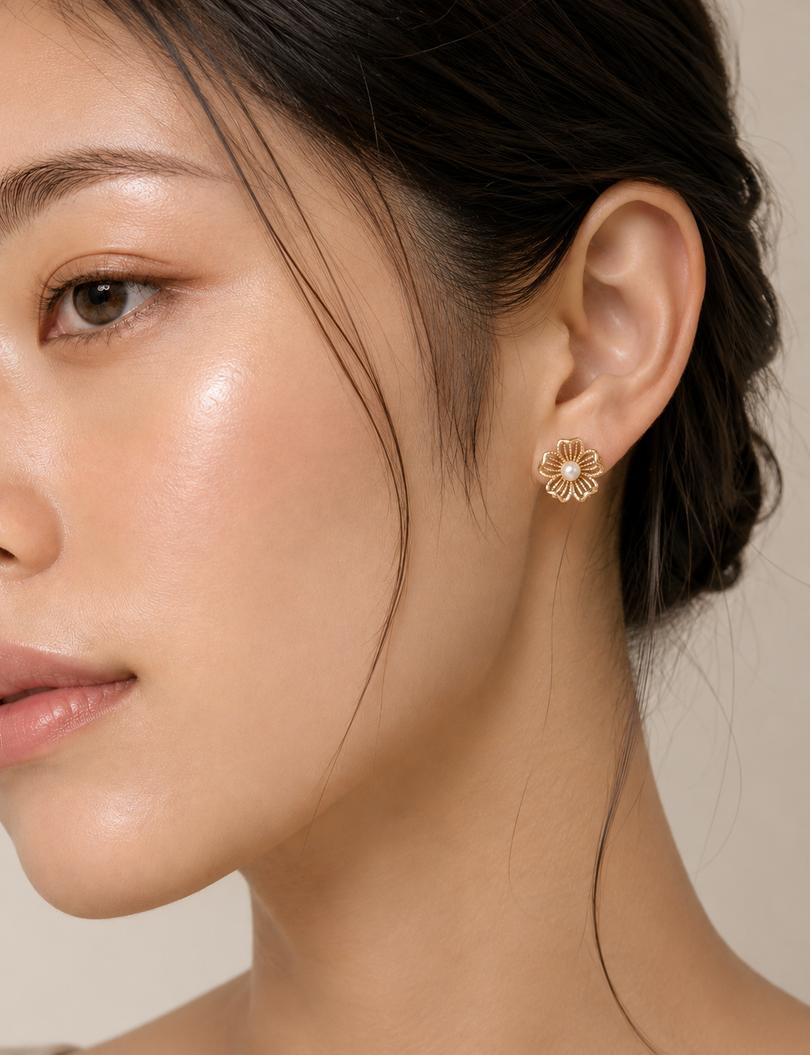
Lightweight studs
Studs are often the easiest starting point because they sit close to the ear and do not pull downward. Look for smooth posts and secure backs that do not pinch.
Small hoops or huggies
Small hoops can be comfortable when they are lightweight and smooth. Avoid overly tight huggies that press into the ear or trap moisture.
Delicate drops
Drop earrings can work for sensitive ears if they are not too heavy. If your ears react easily, avoid wearing heavy drops for a full day on the first try.
Flat or smooth backs
Backings matter. Rough butterfly backs, tight backs, or backs that trap residue can make irritation worse. Choose smooth, comfortable closures whenever possible.
How to Choose Earrings for Sensitive Ears
Step 1: Check the post material
The post is the part that goes through your piercing, so it matters most. Look for clear information about the post material, not only the decorative front of the earring.
Step 2: Choose lightweight designs first
Start with small studs, light hoops, or delicate drops. Heavy earrings can pull on the piercing and make sensitivity worse.
Step 3: Do a short wear test
Wear new earrings for a short period first. If your ears feel itchy, hot, swollen, or uncomfortable, remove the earrings and let your skin calm down.
Step 4: Keep earrings and piercings clean
Wipe earrings after wearing. Avoid trapping perfume, sunscreen, hair products, or sweat around the piercing. For earrings with pearls or gemstones, avoid alcohol or harsh cleaners unless the product care instructions say it is safe.
Lia Atelier Earrings to Consider
If your ears react easily, choose earrings with clear material information and start with shorter wear times. These Lia Atelier styles are good evergreen options to explore because they are wearable, polished, and easy to style.
Minimalist Sterling Silver Drop Earrings

Minimalist Sterling Silver Drop Earrings
A sensitive-ear option with material and dimension details available before you choose.
Mother of Pearl Clover Studs

Mother of Pearl Clover Studs
A sensitive-ear option with material and dimension details available before you choose.
Lily Baroque Pearl Drop Earrings

Lily Baroque Pearl Drop Earrings
Baroque freshwater pearl drops in 18K gold vermeil. Check the post material and dimensions before choosing; no earring is suitable for every sensitive ear.
Pearl Hoop Earrings

Pearl Hoop Earrings
A sensitive-ear option with material and dimension details available before you choose.
What to Avoid If Your Ears React Easily
- Earrings with vague material descriptions
- Very heavy earrings worn for long periods
- Rough posts or tight backs
- Cheap earrings labeled only as “gold tone” or “silver tone”
- Sleeping in earrings that are not meant for long wear
- Applying perfume, sunscreen, or hair spray directly around earrings
When to Stop Wearing Earrings
Remove earrings if you notice redness, itching, burning, swelling, tenderness, discharge, odor, broken skin, or irritation that does not calm down. Do not keep testing the same earrings on irritated ears.
If symptoms are painful, spreading, recurring, or involve discharge, speak with a dermatologist or medical professional.
Related Sensitive Skin Jewelry Guides
Medical and Regulatory Sources
This article provides general education, not a diagnosis or treatment plan. For persistent, severe, spreading, or infected-looking skin reactions, consult a qualified healthcare professional.
Frequently Asked Questions
Why do hypoallergenic earrings still hurt my ears?
Hypoallergenic does not mean allergy-proof. Your ears may still react to trace nickel, other alloys, worn plating, heavy designs, tight backs, or product buildup around the piercing.
What earrings are best for sensitive ears?
Many sensitive wearers start with titanium, surgical steel, solid gold, sterling silver, or clearly described gold vermeil. The best choice depends on your personal sensitivities.
Is sterling silver safe for sensitive ears?
Sterling silver can work well for many people, but it depends on the alloy and your skin. Look for 925 sterling silver and clear material details.
Are lightweight earrings better for sensitive ears?
Yes. Lightweight earrings reduce pulling and pressure around the piercing, which can help minimize discomfort.
What should I do if earrings make my ears red or itchy?
Remove the earrings, clean the area gently, and avoid wearing the same pair again while your ears are irritated. If symptoms continue or worsen, speak with a medical professional.