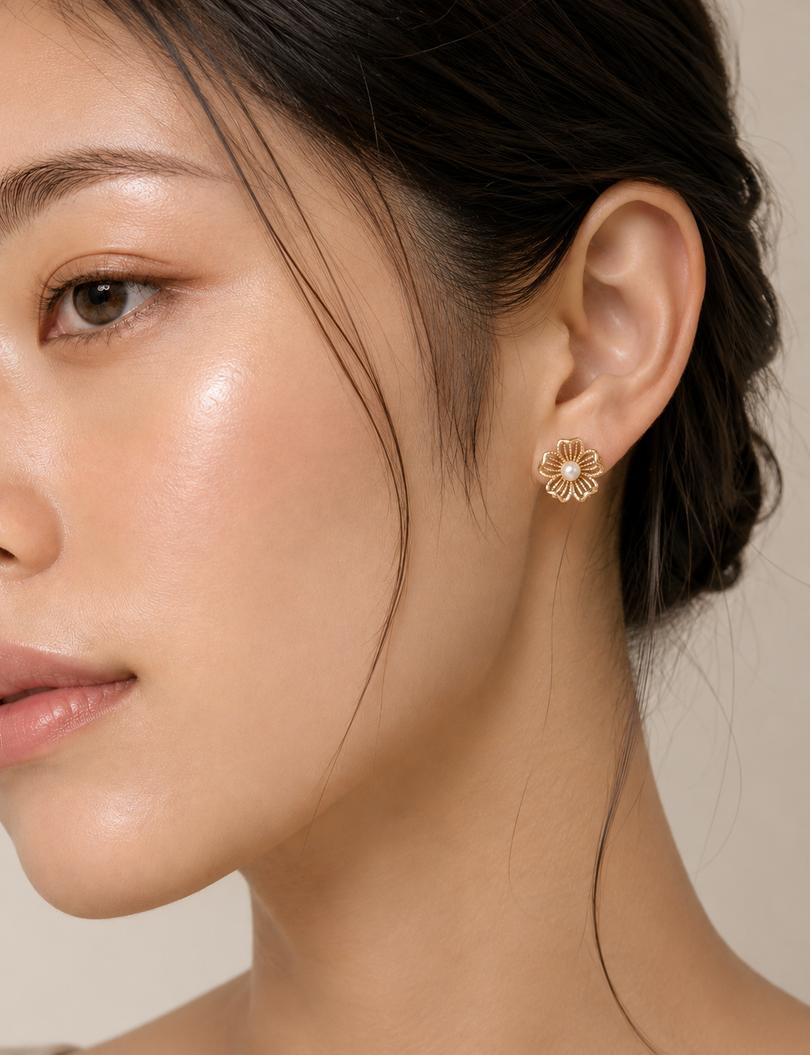
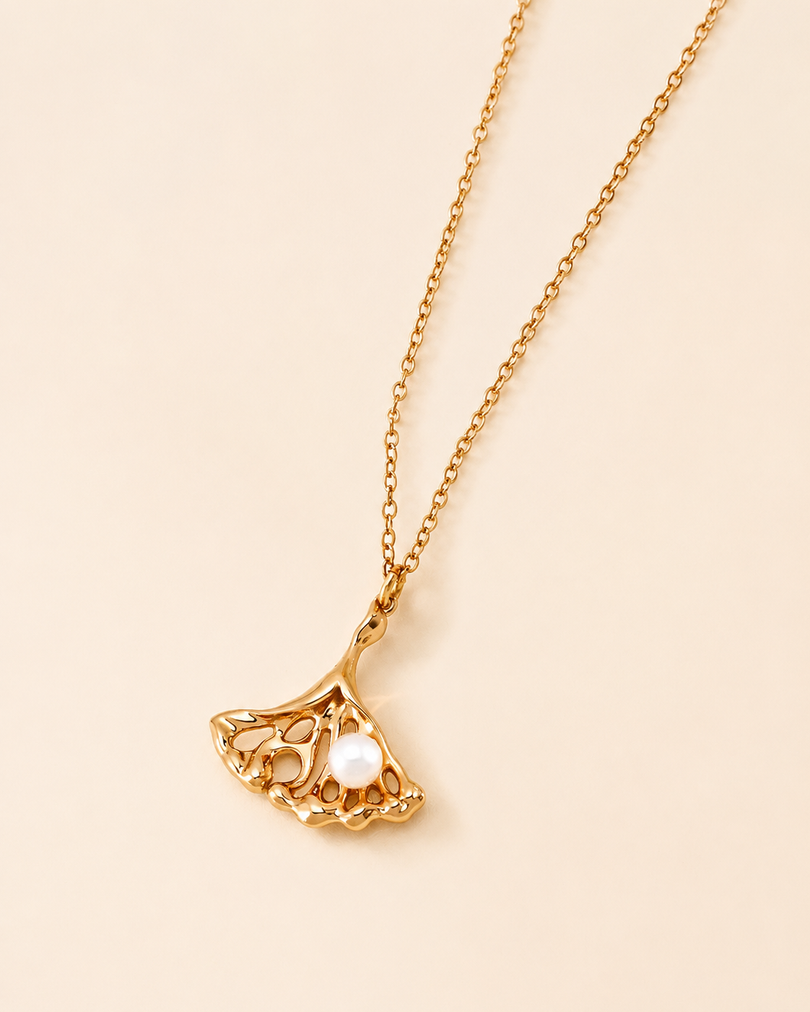

Les perles baroques ont une forme irrégulière. Les perles rondes sont sphériques. Toutes deux sont de vraies perles de culture, mais elles ont un aspect différent, dégagent une énergie de style différente et conviennent à des créations de bijoux différentes. Voici comment choisir entre les deux.
La principale différence
| Caractéristique | Perles rondes | Perles baroques |
|---|---|---|
| Forme | Sphérique, 0 à 2 % d'écart par rapport au cercle parfait | Irrégulière — il n'y en a pas deux identiques |
| Lustre | Uniforme sur toute la surface | Variable sur la surface ; souvent spectaculaire par endroits |
| Rareté | Les perles parfaitement rondes sont plus rares dans la nature — plus d'effort de culture requis | Apparition naturelle lorsque les mollusques tournent la perle de manière inégale |
| Prix | Plus élevé pour les ensembles assortis de perles rondes identiques | Souvent moins cher par perle, mais les créations prisées ont un prix plus élevé |
| Esthétique | Classique, formelle, traditionnelle | Contemporaine, sculpturale, organique |
| Unicité | La cohérence est le point clé | Chaque pièce est unique |
Perles rondes : à quoi elles servent
Les perles rondes sont ce que la plupart des gens imaginent lorsqu'ils pensent aux "bijoux en perles" : le collier classique à un seul rang, les boucles d'oreilles solitaires. La rondeur n'est pas seulement une préférence esthétique ; c'est un marqueur de compétence en matière de culture et de qualité des matériaux. La production d'une perle parfaitement sphérique nécessite des techniques spécifiques et une récolte sélective.
Les perles rondes conviennent le mieux à :
- Des boucles d'oreilles où la symétrie entre les deux perles est visible
- Des colliers à un seul rang où l'uniformité crée le look traditionnel
- Des bijoux de mariée et formels où l'esthétique classique est attendue
- Des designs minimalistes où la perle est le seul point focal
Perles baroques : à quoi elles servent
Les perles baroques apparaissent lorsque le mollusque tourne ou repositionne la perle pendant sa formation, créant des formes irrégulières : allongées, noueuses, sculpturales, informes. Parce que chaque perle baroque est unique, les bijoux en perles baroques sont par définition des pièces uniques.
Le design contemporain a adopté les perles baroques pour leur qualité organique ; elles semblent moins formelles, plus portables et plus personnelles que la perfection prévisible des perles rondes. Les designers travaillant dans des esthétiques sculpturales ou inspirées de la nature préfèrent souvent les perles baroques pour cette raison.
Les perles baroques conviennent le mieux à :
- Des colliers pendentifs où la forme devient le design
- Des boucles d'oreilles pendantes où le mouvement et l'asymétrie sont intentionnels
- Des pièces remarquables destinées à être remarquées
- Des esthétiques de bijoux contemporaines, avant-gardistes ou artistiques
- Des acheteurs qui veulent une pièce que personne d'autre n'a
Types de formes baroques
| Forme | Description | Utilisation courante |
|---|---|---|
| Baroque | Forme irrégulière générale — allongée, grumeleuse ou asymétrique | Pendentifs, boucles d'oreilles pendantes |
| Semi-baroque | Presque ronde avec des irrégularités mineures | Colliers, créoles |
| Pièce | Perle plate en forme de disque | Pendentifs, colliers modernes |
| Poire | En forme de poire, avec une orientation claire haut et bas | Boucles d'oreilles, pendentifs |
| Bouton | Bombée sur le dessus, plate sur le dessous | Bagues, boucles d'oreilles puces |
| Keshi | Perle accidentelle entièrement en nacre — fine, plate, irrégulière | Perles d'accentuation, pièces uniques |
La forme affecte-t-elle la qualité des perles ?
La forme et la qualité sont des facteurs indépendants. Une perle baroque peut être de qualité AAA – lustre exceptionnel, surface propre, nacre épaisse – et une perle ronde peut être de faible qualité. La forme affecte l'esthétique et la rareté, mais pas les indicateurs de qualité comme le lustre et la surface.
Pour les perles baroques classées, les indicateurs clés changent : au lieu d'évaluer la sphéricité, vous évaluez la symétrie de la forme spécifique, la propreté et le caractère spectaculaire de la surface, et si le lustre est cohérent sur la surface irrégulière.
La question du prix : laquelle coûte le plus cher ?
Cela dépend de ce que vous comparez. Pour les ensembles assortis, les perles rondes ont une prime car la production de perles rondes identiques à grande échelle nécessite une récolte sélective. Les perles baroques individuelles sont souvent moins chères par perle. Cependant, les spécimens baroques exceptionnels — très grands, aux formes spectaculaires, avec un excellent lustre — peuvent atteindre des primes significatives en raison de leur caractère unique.
Pour la plupart des acheteurs dans la catégorie des perles d'eau douce, les bijoux baroques de haute qualité peuvent coûter légèrement moins cher que des bijoux en perles rondes équivalents tout en offrant une esthétique plus distinctive. C'est pourquoi les perles baroques sont un excellent choix de valeur pour les acheteurs qui préfèrent un style contemporain plutôt que traditionnel.
Laquelle choisir ?
| Si vous voulez… | Choisissez… |
|---|---|
| Un look classique, intemporel, traditionnel | Ronde |
| Contemporain, sculptural, unique | Baroque |
| Des bijoux de mariée ou formels | Ronde (ou baroque poire si mariée non traditionnelle) |
| Des bijoux de mode quotidiens | Baroque |
| Une paire de boucles d'oreilles assortie | Ronde (un assortiment quasi parfait est plus facile) |
| Un pendentif unique en son genre | Baroque |
| Le meilleur rapport qualité-prix pour une pièce distinctive | Baroque |
Foire aux questions
Les perles baroques sont-elles de moindre qualité que les perles rondes ?
Non — la forme et la qualité sont indépendantes. Les perles baroques peuvent être de qualité AAA avec un lustre et une surface exceptionnels. La forme irrégulière reflète les conditions de culture, pas un défaut de qualité. De nombreuses perles baroques de première qualité sont cultivées intentionnellement pour leur forme.
Les perles baroques sont-elles une tendance ou sont-elles là pour rester ?
Les bijoux en perles baroques sont en constante augmentation depuis 2018 et ont accéléré entre 2023 et 2025. Cette demande provient d'un changement fondamental de préférence esthétique vers un design organique, imparfait et inspiré par la nature, qui n'est pas dépendant des tendances à court terme comme le sont les tendances de couleurs ou de silhouettes spécifiques.
Peut-on mélanger des perles baroques et rondes dans une même tenue ?
Oui — et cela fonctionne très bien. Des boucles d'oreilles pendantes baroques avec des clous d'oreilles en perles rondes est une combinaison asymétrique valide. Un pendentif baroque sur une chaîne avec des créoles en perles rondes crée un contraste de texture. La clé est de garder les autres éléments simples afin que les deux types de perles ne se fassent pas concurrence.
Les pièces en perles baroques se photographient-elles bien ?
Oui — souvent mieux que les pièces en perles rondes pour la photographie éditoriale et de style de vie. La forme irrégulière crée un intérêt visuel dans les photos et capte la lumière sous plusieurs angles. Les perles rondes se photographient magnifiquement dans des contextes formels ou de portrait ; les perles baroques se photographient avec plus de caractère dans des clichés naturels, environnementaux ou de style de vie.