New Chinese Aesthetics has become one of the most influential design movements of the 2020s. It is not a trend in the traditional sense. It is a cultural reclamation: a generation rediscovering the beauty of Chinese heritage and rewriting how it looks in a modern context. This guide explains what New Chinese Aesthetics jewelry is, why it matters, and how to wear it with confidence.

What Is 新中式 (New Chinese Aesthetics)?
新中式 translates literally as "new Chinese style." As a design movement, it refers to work that takes the visual language of classical Chinese culture — jade symbolism, botanical motifs, ancient craft techniques — and expresses it through a contemporary, minimalist sensibility.
It emerged as a distinct category in 2023 and accelerated globally in 2024 and 2025. The movement is not about wearing a traditional hanfu or replicating Qing dynasty court jewelry. It is about fluency: understanding the meaning behind forms and materials, and choosing pieces that carry that meaning into everyday modern life.
For jewelry, New Chinese Aesthetics means designs that feel refined and wearable anywhere in the world — while carrying unmistakable references to a specific, rich cultural tradition.
The Core Materials of New Chinese Aesthetics Jewelry
Freshwater Pearls
Pearls have been central to Chinese jewelry for over two thousand years. In Chinese cultural tradition, pearls represent purity, wisdom, and feminine grace. In New Chinese Aesthetics design, they appear in forms that move away from the classic Western strand — think asymmetric drops, sculptural baroque shapes, and pearl-set hairpins. The all-nacre composition of freshwater pearls makes them ideal for pieces worn daily.
Purple Sandalwood (紫檀木)
Purple sandalwood is one of the rarest and most prized woods in Chinese material culture. Dense, richly grained, and naturally fragrant, it has been used in imperial furnishings, Buddhist prayer beads, and fine jewelry for centuries. In New Chinese Aesthetics jewelry, it appears as hairpin shafts, ring bands, and pendant settings — grounding high-polish gold and pearl elements with warmth and texture. See: Purple Sandalwood Jewelry: What It Is and Why It Matters
18K Gold Vermeil
New Chinese Aesthetics is inherently a fine jewelry aesthetic. The materials need to feel substantial. 18K gold vermeil — sterling silver base, 2.5-micron gold layer — delivers that quality at a price point that works for daily wear. It brings the warm richness associated with imperial Chinese gold without the cost of solid gold.
Jade (玉)
No material is more deeply embedded in Chinese cultural identity than jade. In Confucian philosophy, jade's five virtues — benevolence, wisdom, courage, justice, and purity — made it the moral mineral. New Chinese Aesthetics jewelry uses jade both literally (carved pendants, set rings) and symbolically, with designs whose flowing, organic forms echo jade aesthetics even in pearl and vermeil.
Symbolic Motifs in New Chinese Aesthetics Jewelry
Every element in well-designed New Chinese Aesthetics jewelry carries meaning. The phoenix (凤凰) represents transformation and feminine power. The lotus (莲花) symbolizes purity and spiritual awakening. Clouds (云纹) suggest good fortune and transcendence. Understanding what you are wearing deepens your connection to the pieces — and makes for better conversations. See: Chinese Jewelry Symbols: Phoenix, Lotus, Jade and What They Mean
New Chinese Aesthetics Jewelry by Category
Hairpins (髮簪 fa-zan)
The hairpin is the most iconic piece in New Chinese Aesthetics jewelry. Ancient in origin — the ji li ceremony at age fifteen marked a girl's first hairpin and transition to womanhood — the fa-zan carries centuries of meaning. Contemporary interpretations pair sculptural pearl or jade elements with purple sandalwood or gold shafts. They work in updos, half-up styles, and twisted buns. See: Neo-Chinese Style Hairpins: Where Ancient Tradition Meets Modern Beauty
Earrings
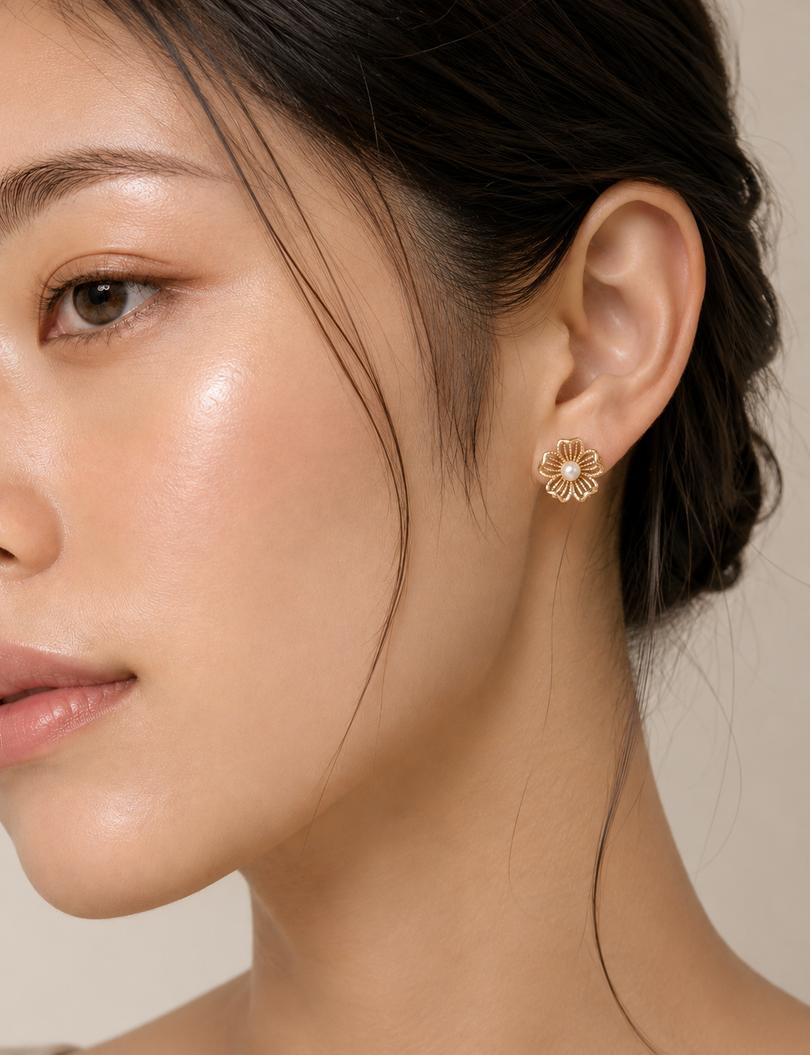
New Chinese Aesthetics earrings tend toward the architectural: drop designs with organic pearl forms, asymmetric pairings, or geometric shapes drawn from classical motifs. They are designed to stand out quietly — visible, considered, never loud.
Necklaces and Pendants
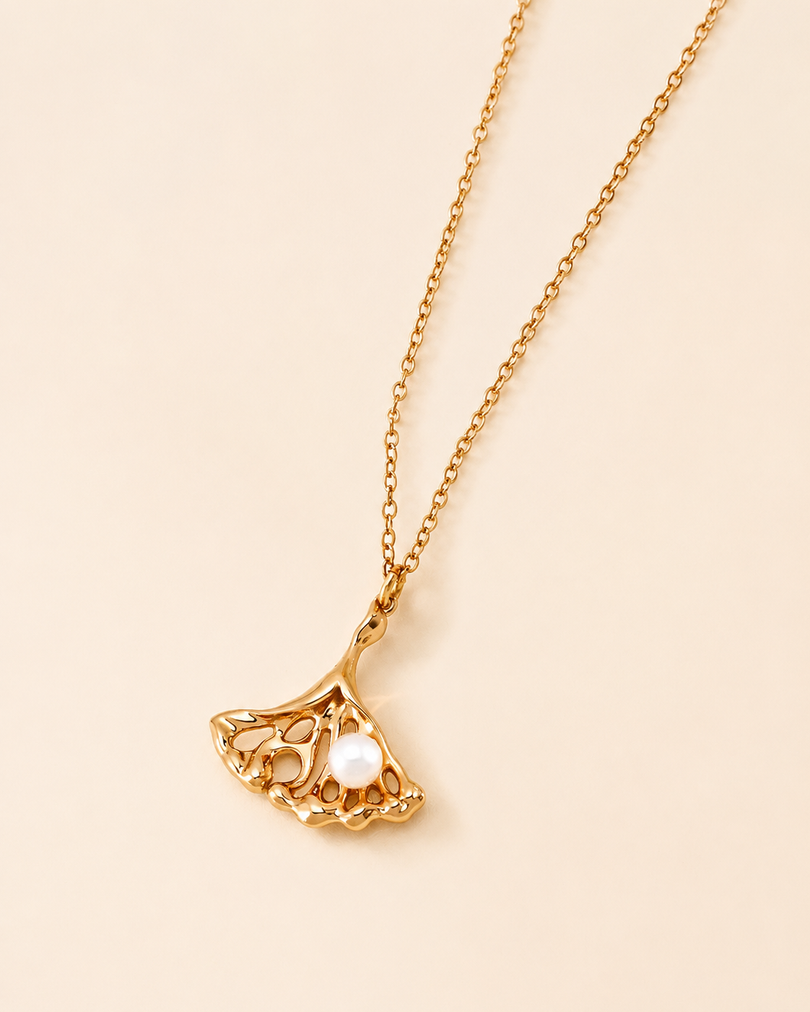
Pendant designs in New Chinese Aesthetics jewelry often reference botanical forms — lotus petals, cloud scrolls, plum blossoms. Layering a pendant over a simple neckline is one of the most accessible ways to bring New Chinese Aesthetics into everyday dressing.
Rings
Ring designs in this aesthetic lean sculptural: wide bands set with baroque pearls, purple sandalwood inlaid in gold, or understated settings that let material texture do the work.
How to Wear New Chinese Aesthetics Jewelry
The goal is fluency, not costume. New Chinese Aesthetics pieces work with:
- Clean-lined Western clothing — white shirts, tailored trousers, simple dresses
- Contemporary Chinese-influenced silhouettes — mandarin collar tops, wrap blouses
- Business and smart-casual settings — a pearl hairpin or structured earring elevates without being formal
- Evening wear — statement baroque pearl drops or a phoenix pendant reads as fine jewelry anywhere in the world
For a full breakdown by occasion — Chinese New Year, weddings, office, and daily wear — see: New Chinese Aesthetics for Every Occasion
For general styling philosophy, see: The Rise of Neo-Chinese Minimalism: How to Style Traditional Elements in a Modern Wardrobe
Who Wears New Chinese Aesthetics Jewelry?
The New Chinese Aesthetics movement started in China and has traveled globally with the diaspora. The woman who wears these pieces lives between cultures — she is fluent in both and wants her jewelry to reflect that. She is not interested in performance or costume. She wants pieces that feel personal, grounded in real meaning, and beautiful enough to wear anywhere.
That is also who Lia Atelier designs for: the modern woman who knows her heritage and wears it on her own terms.
New Chinese Aesthetics vs Traditional Chinese Jewelry
| Traditional Chinese Jewelry | New Chinese Aesthetics Jewelry |
|---|---|
| Formal, ceremonial | Wearable every day |
| Heavily ornate, layered | Restrained, sculptural |
| Reserved for festivals and milestones | Integrated into daily style |
| Literal symbolism (bright reds, gold dragons) | Subtle references to tradition |
| Era-specific (Ming, Qing, etc.) | Timeless — works across decades |
New Chinese Aesthetics Trends in 2026
The 2026 movement has moved decisively toward restraint. Less ornamentation, more material honesty. The pieces getting the most attention are those where the quality of the material is the statement — a deeply grained sandalwood shaft, a pearl with exceptional luster, a gold surface with real depth. See: Neo-Chinese Style 2026: What's Trending in 新中式 Jewelry Right Now
Frequently Asked Questions
Is New Chinese Aesthetics only for people of Chinese heritage?
No. The movement is cultural in origin but not exclusive. People from many backgrounds are drawn to New Chinese Aesthetics jewelry for its aesthetic qualities — the natural materials, the considered symbolism, the restraint. The key is approaching it with genuine appreciation rather than using it as a costume. Understanding what the symbols mean is a good place to start.
How is New Chinese Aesthetics different from fashion jewelry with Asian motifs?
The difference is depth. Fast-fashion pieces may borrow visual elements — a dragon here, a lotus there without understanding or communicating their meaning. Genuine New Chinese Aesthetics jewelry deliberately chooses materials and motifs, informed by their cultural significance. The design decisions are intentional, not decorative.
What piece should I start with?
A pearl hairpin is the most iconic entry point and the most distinctive New Chinese Aesthetics piece. If you prefer something lower-profile for daily wear, a subtle lotus pendant or baroque pearl drop earrings both work well as a first piece.
Can I mix New Chinese Aesthetics jewelry with Western fine jewelry?
Yes — and this is actually the intended approach for New Chinese Aesthetics. The aesthetic is built around integration, not separation. A pearl hairpin works alongside a gold chain necklace. A sandalwood ring pairs naturally with a simple gold band. The contrast is part of the appeal.