
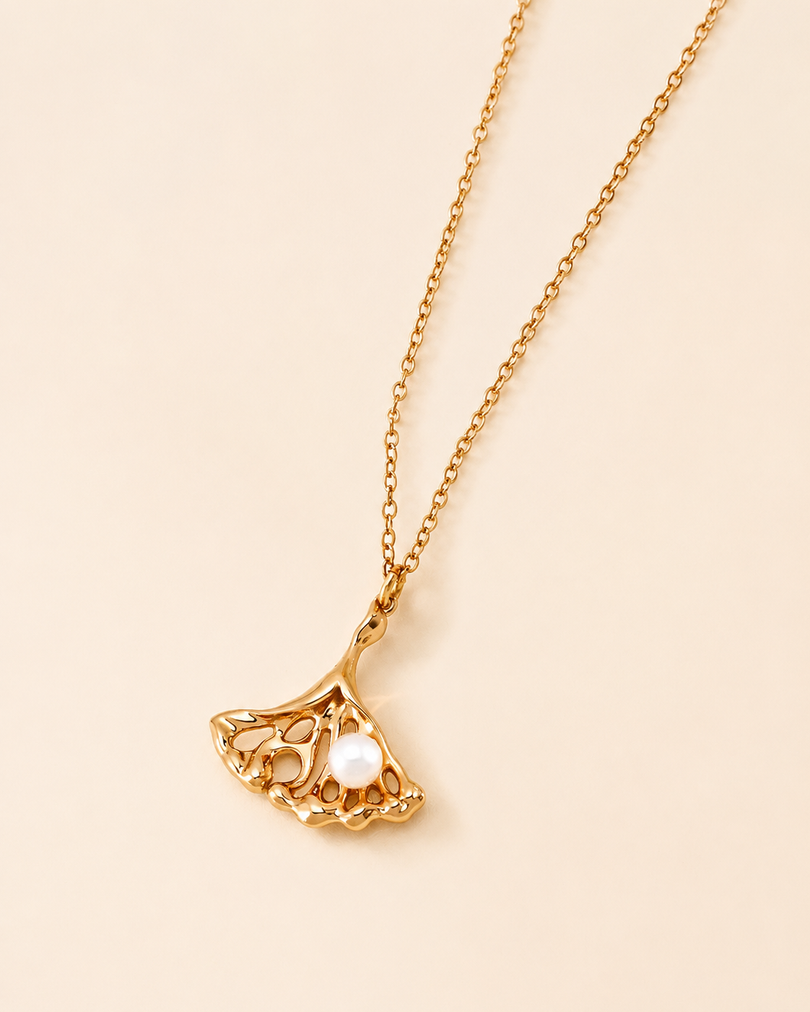
Gold vermeil tarnishes when the sterling silver base reacts with oxygen, moisture, or sulphur compounds in the air, and that tarnish migrates through the gold layer. The gold itself does not tarnish. Thicker plating slows this significantly: Lia Atelier’s 5x plating creates a much longer barrier between the silver and the surface than standard 2.5-micron vermeil.

Why Gold Vermeil Tarnishes (The Chemistry)
Pure gold is chemically inert — it does not react with oxygen or moisture. But vermeil is not pure gold. It is a layer of 18K gold (75% gold, 25% alloy) over 925 sterling silver (92.5% silver, 7.5% copper). The silver and copper in both layers are reactive metals. Over time:
- Sulphur compounds in air, sweat, and products react with the silver and copper
- Tarnish forms at the boundary between the gold layer and the silver base
- As the gold layer wears thin at high-friction points, tarnish becomes visible on the surface
Tarnish is not damage — it is a surface chemical reaction that is fully reversible with proper cleaning.
What Accelerates Tarnishing
| Cause | Why It Tarnishes | How Common |
|---|---|---|
| Sweat and body oils | Contain salt and sulphur compounds | Very common |
| Perfume and hairspray | Alcohol and chemicals strip gold layer | Very common |
| Chlorine (pools, cleaning products) | Aggressive oxidising agent | Common |
| Humidity and air exposure | Moisture accelerates silver oxidation | Common |
| Lotions and sunscreen | Create chemical barrier that traps tarnish | Common |
| Rubber and latex | High sulphur content — fastest tarnish trigger | Less common |
How to Tell If It’s Tarnish or Fading
- Tarnish — dark, brownish or greenish discolouration on the surface. Usually cleanable. The gold layer may still be intact underneath.
- Fading / wear — silver-coloured patches showing through, especially at high-friction points. The gold layer has physically worn away. Cleaning won’t restore it — re-plating is required.
If polishing cloth removes the discolouration, it was tarnish. If the silver colour remains after cleaning, it’s wear.
How to Remove Tarnish from Gold Vermeil
Step 1 — Dry Polishing Cloth (First Resort)
Use the microfibre polishing cloth provided with your Lia Atelier piece. Buff gently in one direction. This handles most early-stage tarnish without any moisture contact.
Step 2 — Mild Soap Spot Clean (If Polishing Cloth Fails)
Mix one drop of mild, fragrance-free dish soap with a cup of lukewarm water. Dip a soft cotton swab — not the piece — and gently dab the tarnished area. Rinse the swab with clean water and dabbing again to remove soap residue. Pat completely dry with a soft cloth. Do not submerge the piece.
Step 3 — Professional Cleaning (Severe Tarnish)
A jeweller can professionally clean and assess whether re-plating is needed. For Lia Atelier pieces, contact us directly if the piece is within its care period.
What NOT to Do
- ❌ Toothpaste — abrasive, will scratch the gold surface
- ❌ Baking soda — abrasive
- ❌ Ultrasonic cleaners — vibration can damage settings and accelerate plating wear
- ❌ Silver polish — designed for bare silver, too harsh for gold-plated surfaces
- ❌ Soaking in water — even clean water weakens the plating bond over time
How to Prevent Tarnish
- Last on, first off — put jewelry on after all products, remove before washing hands
- Airtight storage — store in the provided pouch or a zip-lock bag when not wearing. Reducing air exposure slows tarnish considerably.
- Anti-tarnish strips — place one in your jewelry storage. Absorbs airborne sulphur compounds.
- Wipe after wearing — remove body oils and salts with a dry cloth before storing
- Rotate your pieces — wearing the same piece every day gives it no recovery time
Does Thicker Plating Reduce Tarnish?
Yes — significantly. Thicker gold creates a longer barrier before the silver base is exposed to surface conditions. Standard 2.5-micron vermeil may show tarnish at wear points within months. Lia Atelier’s premium plating maintains the barrier at friction-prone areas far longer, which is why proper-thickness vermeil from a transparent brand looks dramatically better over time than budget alternatives.
For a full comparison of how plating thickness affects longevity, see our guide on how long 18K gold vermeil lasts.
FAQ
Is tarnished gold vermeil ruined?
No. Tarnish is a surface reaction and is almost always reversible with a polishing cloth or gentle cleaning. Tarnished vermeil is not damaged vermeil — it just needs cleaning. Only physical wear through the gold layer is irreversible without re-plating.
Does 18K gold vermeil tarnish faster than 14K?
No — higher karat gold tarnishes more slowly because it contains more pure gold and fewer reactive alloy metals. 18K (75% gold) is more tarnish-resistant than 14K (58.3% gold). This is one reason Lia Atelier uses 18K rather than 14K plating.
How often should I clean gold vermeil?
A quick wipe with a polishing cloth after every wearing is ideal. A more thorough clean every 4–6 weeks if wearing regularly. Don’t over-clean — excessive contact with cleaning solutions degrades plating faster than light tarnish would.
Authoritative sources
The following independent sources support the material definitions, identification methods, and care guidance used in this article.