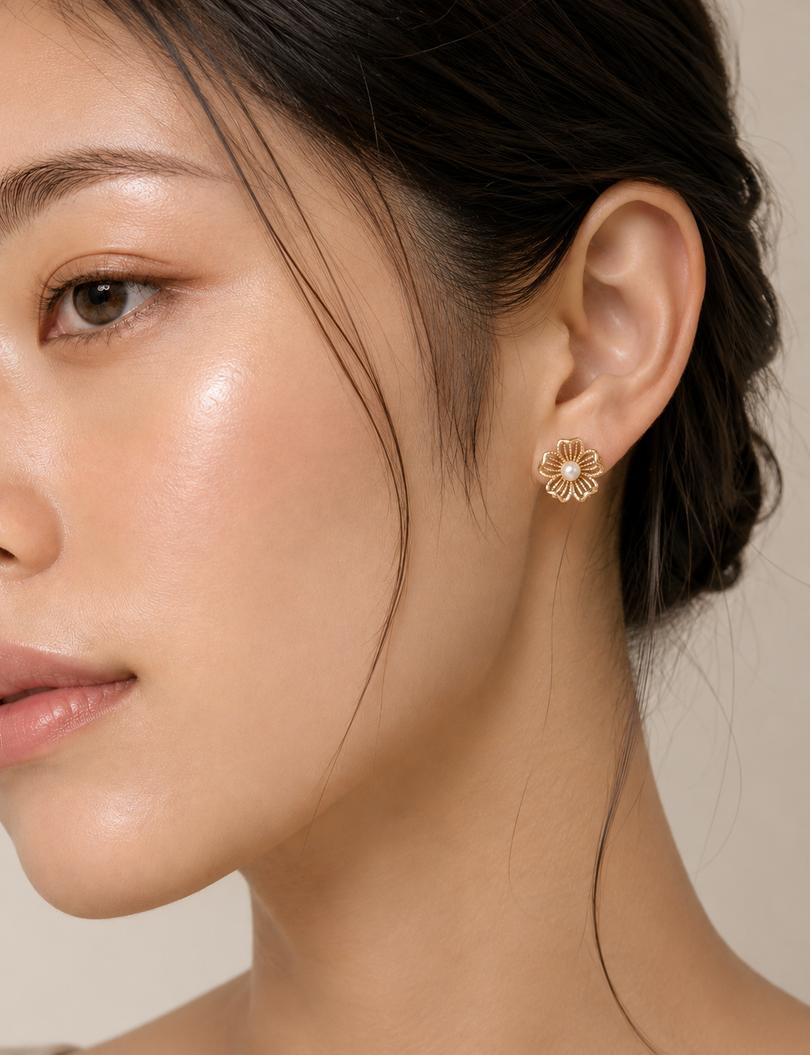
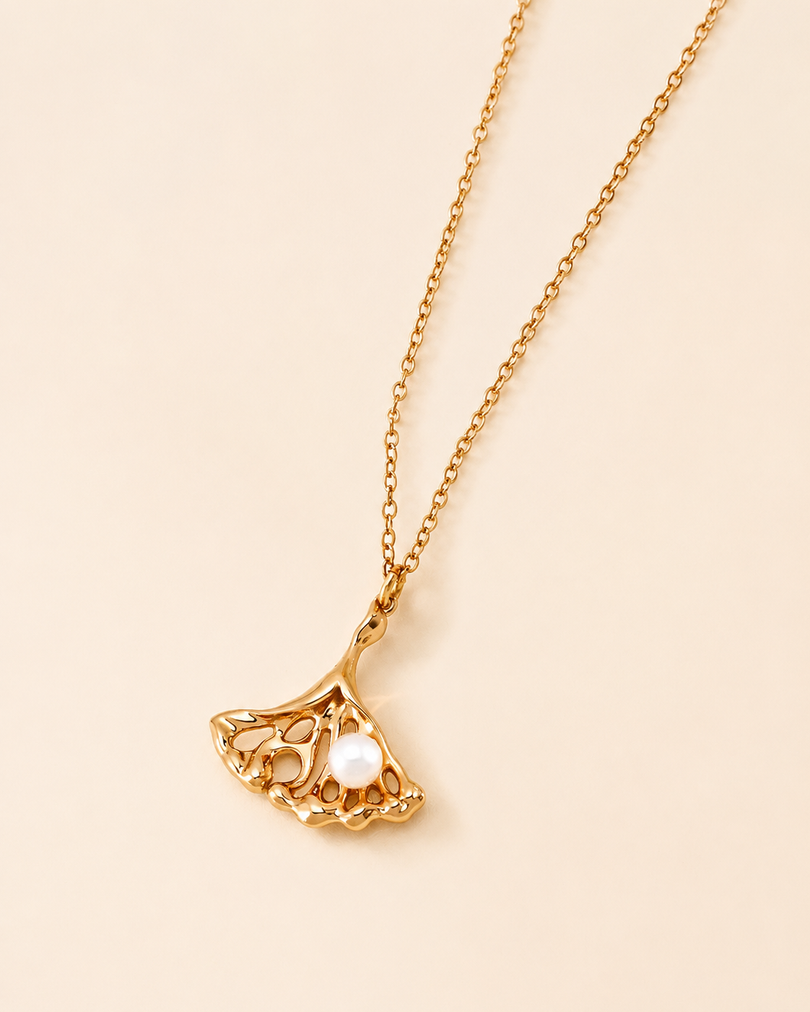
18K gold vermeil contains more pure gold (75%) than 14K (58.3%), which means it is richer in color, more tarnish-resistant, and better for sensitive skin. While 18K solid gold is slightly softer, this durability tradeoff is largely irrelevant in vermeil, where the gold exists as a surface layer.

What Karat Means in Gold Vermeil
Karat measures the purity of the gold used in the plating layer. While 24K is 100% pure gold, it is too soft for jewelry, so an alloy is used for structure:
| Karat | Pure Gold % | Alloy % | Color Profile |
| 24K | 99.9% | 0.1% | Deep yellow (too soft for jewelry) |
| 18K | 75% | 25% | Rich, warm yellow |
| 14K | 58.3% | 41.7% | Lighter yellow |
| 10K | 41.7% | 58.3% | Pale yellow / slightly green |
In solid gold jewelry, a lower karat equals a harder and more durable piece because the alloy metals are harder than gold. In vermeil, this tradeoff matters much less—you're not wearing through a solid block of metal, you're wearing through a surface layer.
| Feature | 14K Vermeil | 18K Vermeil |
| Gold Purity | 58.3% | 75% |
| Color | Lighter yellow | Richer, deeper yellow |
| Tarnish Resistance | Moderate | Higher (less reactive alloy) |
| Skin Sensitivity | Higher risk (more alloy content) | Safer (less room for reactive metals) |
| Cost | Slightly lower | Slightly higher |
| Durability (Solid Gold) | More durable | Slightly softer |
| Durability (Vermeil) | Negligible difference | Negligible difference |
Why 18K Is the Superior Choice for Vermeil
The one advantage 14K solid gold has over 18K—hardness—becomes irrelevant in vermeil. You are not wearing through a solid block of metal where scratch resistance dictates the lifespan. What actually affects vermeil lifespan in practice is plating thickness, base metal quality, and care habits.
However, the advantages of 18K that do transfer to vermeil are meaningful:
-
Richer Color: 18K has a noticeably warmer, richer yellow than 14K. Side by side, the difference is clear, as 14K can sometimes look slightly green-tinged in cooler lighting.
-
Higher Tarnish Resistance: A less reactive alloy means slower oxidation at the gold-silver interface.
-
Hypoallergenic Properties: 14K alloys often contain more reactive metals (like nickel) used to harden and lighten the gold. With 75% pure gold, 18K leaves less room for irritants, making it significantly safer for sensitive skin.
The Minimum Karat You Should Accept
The FTC allows vermeil to use gold as low as 10 karats (41.7% pure gold). At 10K, the gold layer contains more alloy than actual gold—the color is pale, tarnish resistance drops considerably, and allergy risk increases. You should avoid 10K vermeil.
The practical floor for quality vermeil is 14K, but the superior choice is 18K. At Lia Atelier, we exclusively use 18K across our entire collection for color consistency and long-term performance.
Does Higher Karat Vermeil Cost Significantly More?
In vermeil, the gold layer is microns thick, meaning the total gold content by weight is tiny. The actual material cost difference between 14K and 18K vermeil is minimal (typically under $10 per piece at retail). If a brand is charging a massive premium for 18K over 14K vermeil specifically, that premium is not justified by material cost alone.
For a full explanation of how gold vermeil compares to gold plated and solid gold, see our complete guide to gold vermeil vs gold plated.
Frequently Asked Questions
1. Can you tell the difference between 14K and 18K vermeil by looking?
Yes, side by side. 18K has a deeper, warmer yellow. 14K is lighter and can have a slightly greenish or cooler tone depending on the alloy composition. On its own, the difference is less obvious, but against the skin, the color warmth of 18K is far more flattering for most skin tones.
2. Is 18K gold vermeil good for sensitive skin?
Yes—it is the better choice for sensitive skin compared to 14K. Because 18K contains 75% pure gold and only 25% alloy, there is less room for reactive metals like nickel. Lia Atelier's 18K pieces are certified hypoallergenic, with zero nickel in the gold alloy or the 925 sterling silver base.
3. What karat does Lia Atelier use?
We use 18K across our entire collection. This is a deliberate choice for color quality, tarnish resistance, and hypoallergenic performance—not just a marketing claim. The deeper yellow of 18K perfectly complements the warm tones of our AAA freshwater pearls and the sculptural designs inspired by Neo-Chinese aesthetics.